
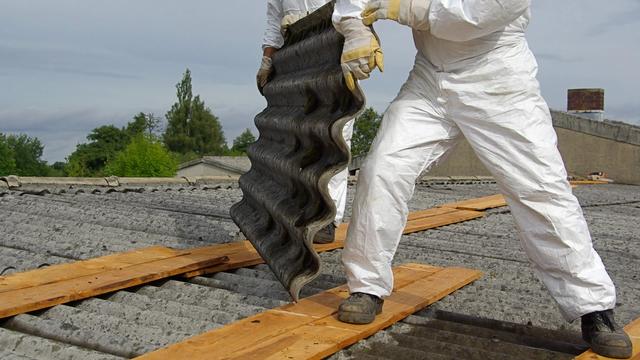
- Simple operations
- The glove bag method
- The hermetically sealed zone
This news article is a summary of the legislation. Would you like to read the full legislation? You can do so here.
1. Simple operations
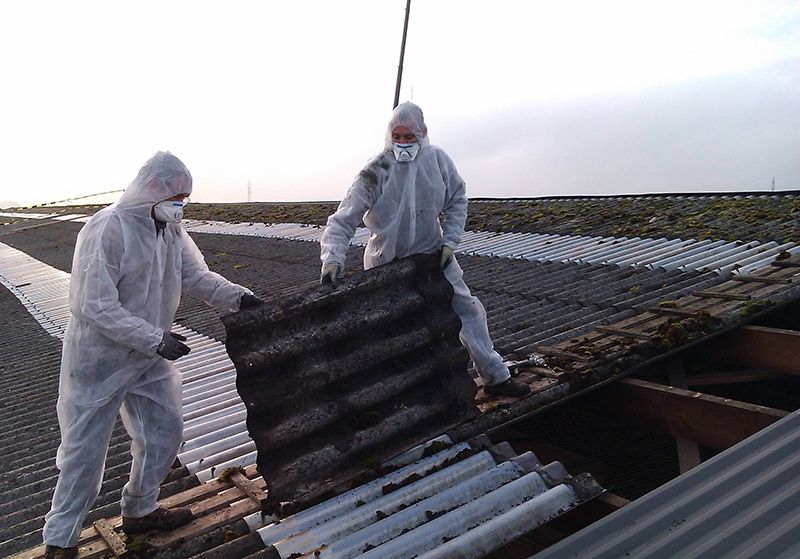
What?
Which materials fall under the simple operations rule?
Only for materials where the risk of asbestos fibres being released is minimal.
- Bonded asbestos that is not damaged, or where no free fibres are visible
- Damaged bonded asbestos may be removed under 3 conditions:
- the situation in which the material is located does not change
- in outdoor application
- and no third parties may be present
Please note: simple operations may only be applied when the asbestos content in the air does not exceed 0,01 fibre per cm3.
How to remove?
Use hand tools, a pull hook, a roofer's hammer or pliers when dismantling the materials in order to avoid dust formation.
Who may carry out this removal?
- Any company active in construction, electricity, plumbing or otherwise may use this technique when both the employees and the site managers follow the asbestos simple operations training annually.
- As a private individual, you may remove bonded asbestos when it is in good condition and you take the necessary precautions
Which asbestos training do you need?
The employer must provide appropriate training to all employees who are exposed to asbestos.
- Asbestos simple operations training
- 8 hours
- Repeat annually
2. Glove bag method
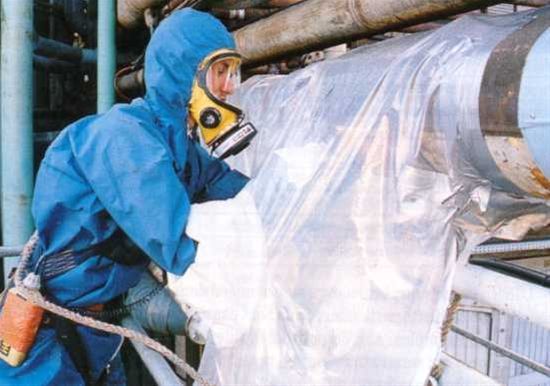
What?
For which materials do you use the glove bag method?
For removing insulation around pipes that contain non-bonded asbestos.
How to remove?
- Using glove bags, the asbestos-containing material is hermetically sealed off from the environment. The glove bag must be carefully placed around the pipe so that no asbestos fibres are released.
- The plastic bag is fixed around the pipe with tape, so that it is properly sealed off from the outside air.
- Two gloves are built into the bag to be able to remove the asbestos.
Who?
Only certified asbestos removers may apply the glove bag method.
Which asbestos training do you need?
The employer must provide appropriate training to all employees who are exposed to asbestos.
- Asbestos demolition and removal training
- Basic training of 32 hours
- Annual refresher training of 8 hours
3. Hermetically sealed zone
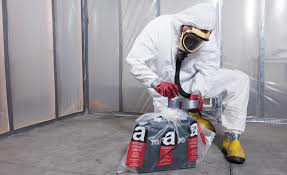
What?
For which materials do you use a hermetically sealed zone?
For removing non-bonded asbestos where the structure of the material may be affected (for example by breaking it).
How to remove?
The space in which the asbestos is located is completely hermetically sealed off. Within this zone, the asbestos can be safely removed. The air inside the zone is purified via special filters.
Safety measures:
- During the works, the concentration of asbestos fibres in the air is measured daily
- Work clothing, protective clothing and respiratory equipment are mandatory
- After use, the protective equipment is cleaned in an appropriate manner. It is transported in hermetically sealed packaging.
- All waste is removed from the zone via a special airlock.
- The waste is double-packaged and provided with a label bearing the asbestos logo.
Who?
Only certified asbestos removers may apply the hermetically sealed zone method.
Which asbestos training do you need?
The employer must provide appropriate training to all employees who are exposed to asbestos.
- Asbestos demolition and removal training
- Basic training of 32 hours
- Annual refresher training of 8 hours
18/05/2018