
What does this training cover?
A gas test decides whether someone can safely enter a tank, pit or shaft. A gas detector won't warn you that it is faulty itself: a poisoned sensor simply reads zero. That's why you learn to know, test and read your detector, and what to do when it alarms.
Who is it for? Anyone who releases a confined space for entry (gas tester), the safety watch, and company fire brigades who test during an intervention.
What you learn:
- When a space counts as a confined space, and what risks the air inside can pose
- Oxygen deficiency, explosion risk and toxic gases such as CO and H₂S
- Who does what: gas tester, safety watch, supervisor and work permit
- Your detector: sensors, limits, A1 and A2 alarms
- The start-up check: fresh air calibration, bump test and leak test
- Pre-entry testing step by step: at every height, with hose and pump
- Measuring vapours (VOCs) with a PID sensor
Actions, not words
- One day: half theory, half practice. After each chapter, a short knowledge check or practical exercise.
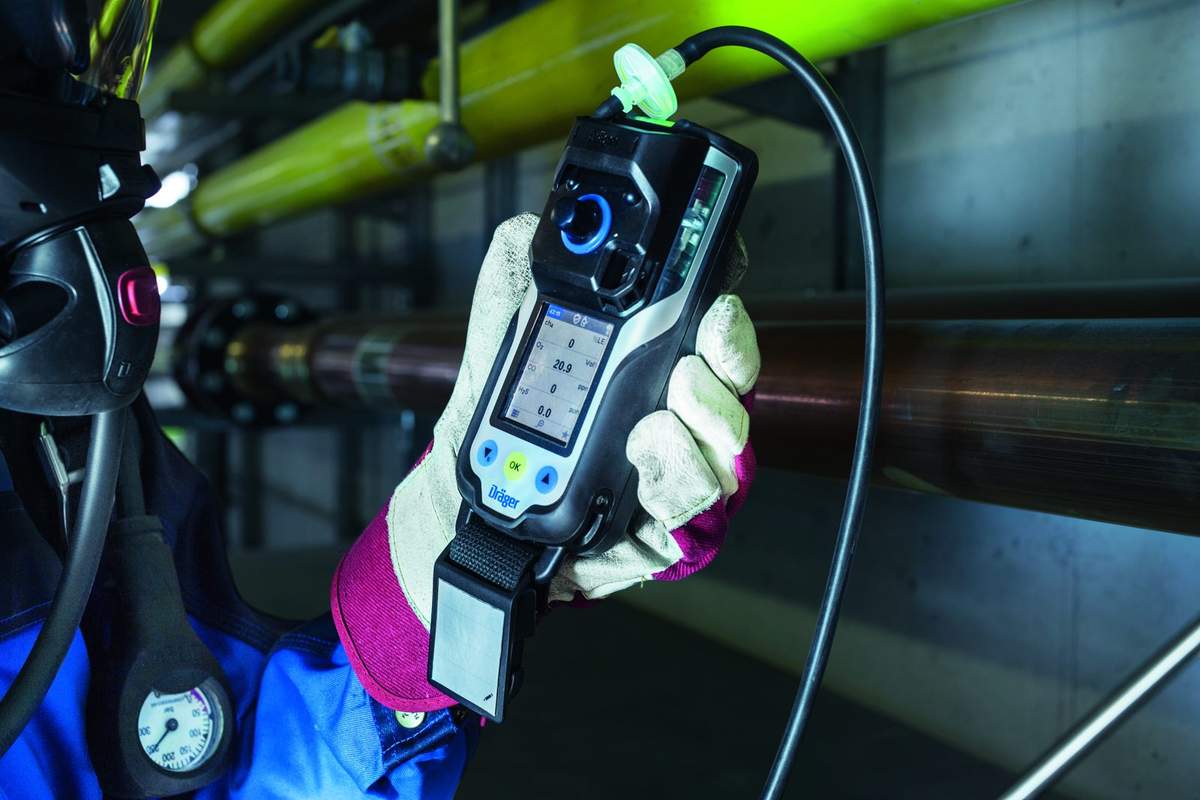
- With your own detector: we practise with the detector you use, for example the Dräger X-am 8000.
- Based on your procedure: we build your work permit, alarm thresholds and agreements into the training.
- Certificate: after the training, your certificate is in the Normec Praxis certificate portal.
What does the law say?
The employer assesses the risks of hazardous substances and explosive atmospheres, and makes sure workers get the training they need. The rules are set out in the Belgian Code of well-being at work.
Code, Book III, Title 4: explosive atmospheres
Code, Book VI, Title 1: chemical agents
Frequently asked questions
Which detector do we use?
The one you work with. If you use different detectors, we decide together beforehand which ones to include in the training.
Do I need prior knowledge?
No. If you already have experience with confined spaces, the training builds on it.
Can the training take place at our company?
Yes. We give gas testing training in-company, on your site and with your own detectors and procedures.