
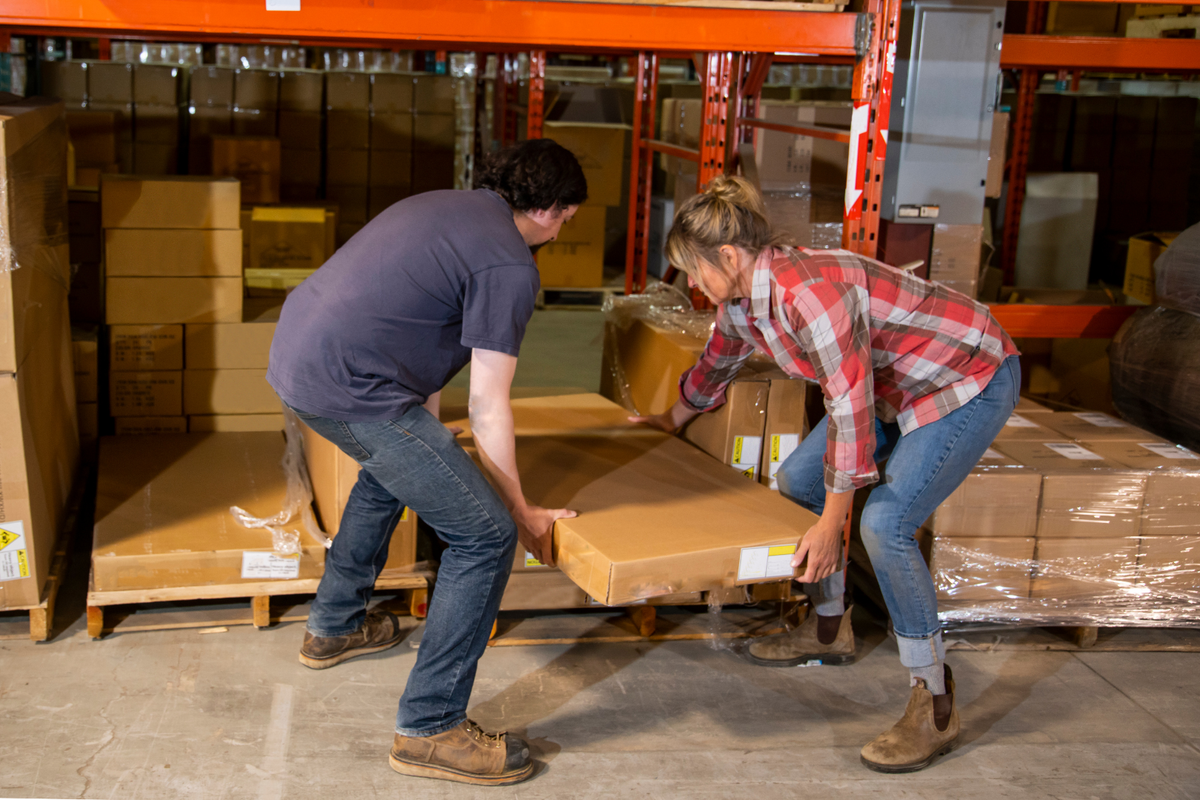
Save yourself a lifetime of back complaints!
WHAT DOES THIS ERGONOMICS LIFTING AND CARRYING TRAINING COVER?
The risks associated with lifting and carrying are a major cause of workplace accidents and medical absences.
Despite advanced robotisation, we still handle many loads purely manually. A correct working method can save both employees and the company a great deal of trouble!
In this training we first look at the causes of physical overload. Then we get to work with the right tools and lifting and carrying techniques.
Using simple exercises, we learn to move correctly and adopt the right working posture to avoid overload.
With the right posture, you avoid not only temporary overload but also back complaints later in life!
Legislation and responsibilities (mandatory since 25/05/2024)
- 1° the nature of the risks and the biomechanical and other risk factors referred to in Article VIII.1-1, as well as the possible health consequences, such as MSDs
- 2° the prevention measures taken and the appropriate working methods, and how they are applied
- 3° the role of the hierarchical line in applying and monitoring the prevention measures;
- 4° health surveillance
- 5° the procedure for detecting and reporting MSDs or other health problems caused by musculoskeletal risks at work
Content: adaptable to the target audience
- Risks and points of attention
- Definition of ergonomics
- Basic human anatomy and physiology
- Consequences of physical overload
- Back problems
- Neck complaints
- Tools and techniques in practice
- Working posture
- Lifting and carrying technique
- Pulling and pushing technique
- Repetitive work and "break time"
- Stretching and muscle-strengthening exercises
- Everyday movements
- Correct use of machines
ACTIONS, NOT WORDS!
- Theoretical introduction (30%) with plenty of practical exercises (70%)
- Every participant receives a certificate of attendance
The employer ensures that workers and the Committee receive information and appropriate training on musculoskeletal risks at work (Art. VIII.1-5, Royal Decree amending book VIII of the code on well-being at work regarding ergonomics at work and the prevention of MSDs).
The employer ensures that every worker receives sufficient and appropriate training on the well-being of workers in the performance of their work, specifically focused on their workstation or function. This training is adapted to the evolution of risks and the emergence of new risks and is repeated periodically if necessary (Code, book II, title 3).
Frequently asked questions
Who is the ergonomics lifting and carrying training for?
For anyone who manually handles loads. Correct posture prevents overload, back complaints and musculoskeletal disorders (MSDs).
Is this training legally required?
Since 25/05/2024, the employer must inform and train workers on musculoskeletal risks at work (Code, book VIII).
How does the training work?
Mostly hands-on (70% exercises): we look at the causes of overload and practise the correct lifting, carrying, pulling and pushing techniques. Every participant receives a certificate of attendance.