
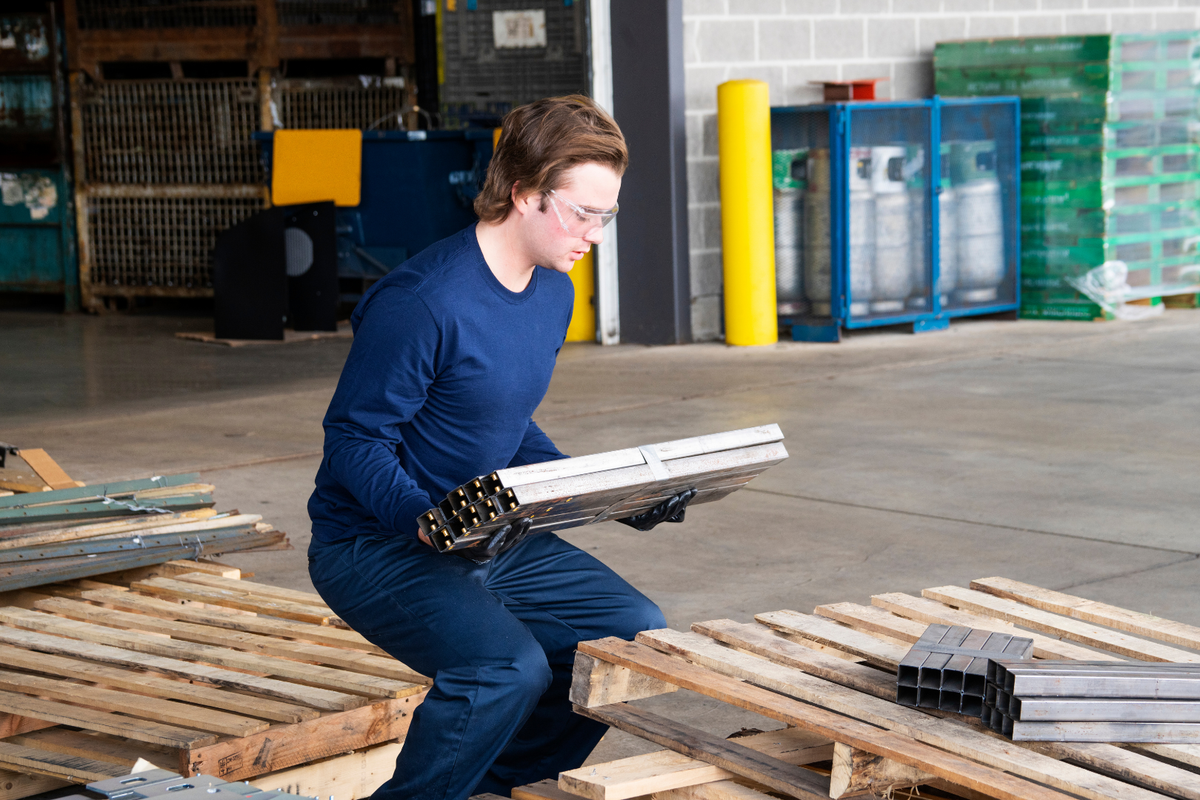
A good back is an investment in yourself!
WHAT DOES THIS ERGONOMICS FOR CONSTRUCTION TRAINING COVER?
The image of the construction worker as a robust bear who has to rely on muscle power makes it harder to change bad habits.
'Good for wimps' and 'All a waste of time' are remarks that sometimes come up at the start of an ergonomics training. But after a confrontation with the personal consequences, the penny still drops for many construction workers!
The risks of lifting and carrying are in fact at the root of many workplace accidents and medical absences in the construction sector.
With simple practical exercises, we learn to move correctly and adopt the right working posture.
Legislation and responsibilities (mandatory since 25/05/2024)
- 1° the nature of the risks and the biomechanical and other risk factors referred to in article VIII.1-1, as well as the possible health consequences such as MSDs
- 2° the prevention measures taken and the appropriate working methods, as well as the way they are applied
- 3° the role of the hierarchical line in applying and monitoring the prevention measures;
- 4° health surveillance
- 5° the procedure for detecting and reporting MSDs or other health problems caused by musculoskeletal risks at work
Content: adaptable to the target group
- Risks and points of attention
- Basic human anatomy and physiology
- Consequences of physical overload
- Back problems
- Neck complaints
- Nutrition, exercise, sleep and stress
- Good physical condition
- Effects of alcohol, drugs and medication
- Tools and techniques in practice
- Working posture
- Lifting and carrying technique
- Pulling and pushing technique
- Repetitive work
- Stretching and muscle-strengthening exercises
- Use of mechanical aids and machines
- Vibrations: effect and prevention
NO WORDS, BUT ACTIONS!
- Theoretical introduction (30%) with plenty of practical exercises (70%)
- Every participant receives a certificate of attendance
The employer ensures that workers and the Committee receive information and appropriate training on musculoskeletal risks at work. (Art. VIII.1-5, Royal Decree amending book VIII of the code on well-being at work concerning ergonomics at work and the prevention of MSDs)
The employer ensures that every worker receives sufficient and appropriate training on the well-being of workers in the performance of their work, specifically focused on their workstation or function. This training is adapted to the evolution of risks and the emergence of new risks and is, where necessary, repeated at regular intervals. (Code, book II, title 3)
Frequently asked questions
Who is the ergonomics in construction training for?
For construction workers and employees in the construction sector who lift and carry heavy loads and want to protect their back.
Is ergonomics training mandatory?
Since 25/05/2024, employers must provide workers with information and appropriate training on musculoskeletal risks at work (Code, book VIII).
Do I receive a certificate?
Every participant receives a certificate of attendance.