
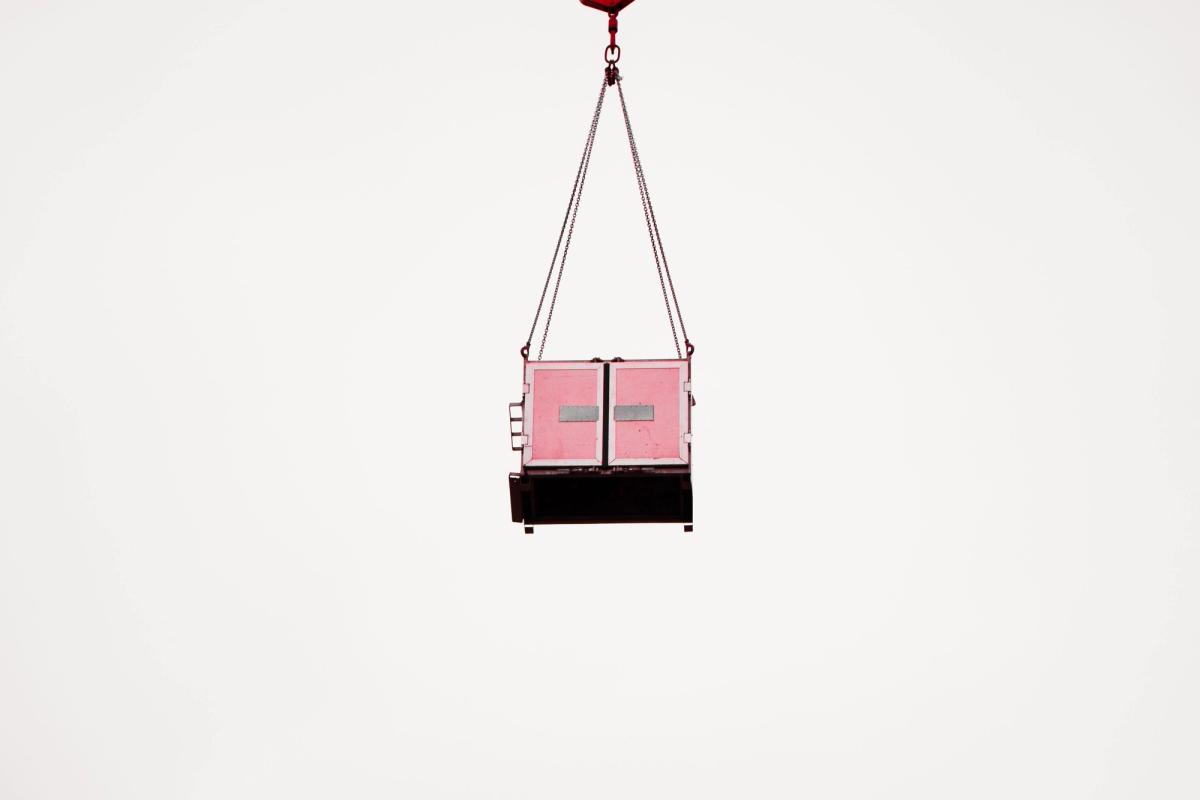
Get your non-critical load lifting certificate now
WHAT DOES THIS NON-CRITICAL LOAD LIFTING TRAINING COVER?
A lifting appliance is a device intended for the vertical, and possibly horizontal, movement of freely suspended loads.
This training is aimed at staff who, during lifting works, sling simple, easy-to-handle non-critical loads.
The lifting rules taught are applicable to various appliances such as mobile crane, tower crane, loader crane or overhead crane.
In this course you not only learn to sling loads safely: after this training you also do it more efficiently.
- Safety and responsibilities of the rigger
- Load charts and inspections
- Critical vs non-critical loads
- Lifting appliances for vertical and horizontal movement of loads
- Mobile cranes, tower cranes, loader cranes, overhead cranes
- Lifting gear for slinging loads
- Eye bolts, shackles, lifting slings, chains, cables
- Stability and balance improvement
- Slinging and moving loads
- Communication and signalling: guiding the load
- Precise positioning
- Improve your technique and precision
Do you work with loads whose centre of gravity is unknown? Then take the critical load slinging and moving course. Does your sector or client require the specific Besacc-VCA diploma? Then take our IS-006 critical load slinging and moving training.
ACTIONS, NOT WORDS!
- One or more days of tailored hands-on training
- Lots of experience (1 day) / little experience (2 days) / no experience (3 to 5 days)
- Theoretical introduction (30%) with plenty of practical exercises (70%)
- Continuous assessment and competence test
- Every participant who passes receives the official NON-CRITICAL LOAD LIFTING certificate
WHAT DOES THE LAW SAY?
Self-propelled mobile work equipment may only be operated by workers who have received adequate training in the safe operation of this equipment (RD 04/05/1999, art. 14.1)
Any workstation where work equipment is used, where motor vehicles, cranes, overhead cranes or lifting devices of any kind are operated, is regarded as a safety function (RD 28/05/2003, art. 2)
The purpose of safety and health signage is to draw attention, quickly and in an easily understandable way, to objects, activities and situations that may cause certain hazards (RD 17/06/1997, annexes 1-9)
Frequently asked questions
What is the difference between critical and non-critical loads?
Non-critical loads are simple, easy-to-handle loads with a known centre of gravity. For loads whose centre of gravity is unknown, take the critical loads training (IS-006).
Which lifting equipment do the rules apply to?
The lifting rules taught apply to various equipment: mobile crane, tower crane, loader crane and overhead crane.
Do I receive a certificate?
Every participant who passes receives the official certificate after continuous assessment and a competence test.