
What influence do you, as a forklift operator, have on ergonomics?
WHAT DOES THIS ERGONOMICS FOR FORKLIFT OPERATORS TRAINING COVER?
A forklift operator who sits on the forklift for many continuous hours has a great interest in a good ergonomic position!
Important factors are the layout of the forklift and the condition of the vehicle. The older a machine, the less comfort and the more strain for the operator.
As an employer, do not make a purchasing decision without first consulting the forklift operator! A forklift operator who sits comfortably in their forklift has fewer health complaints, which leads to higher productivity.
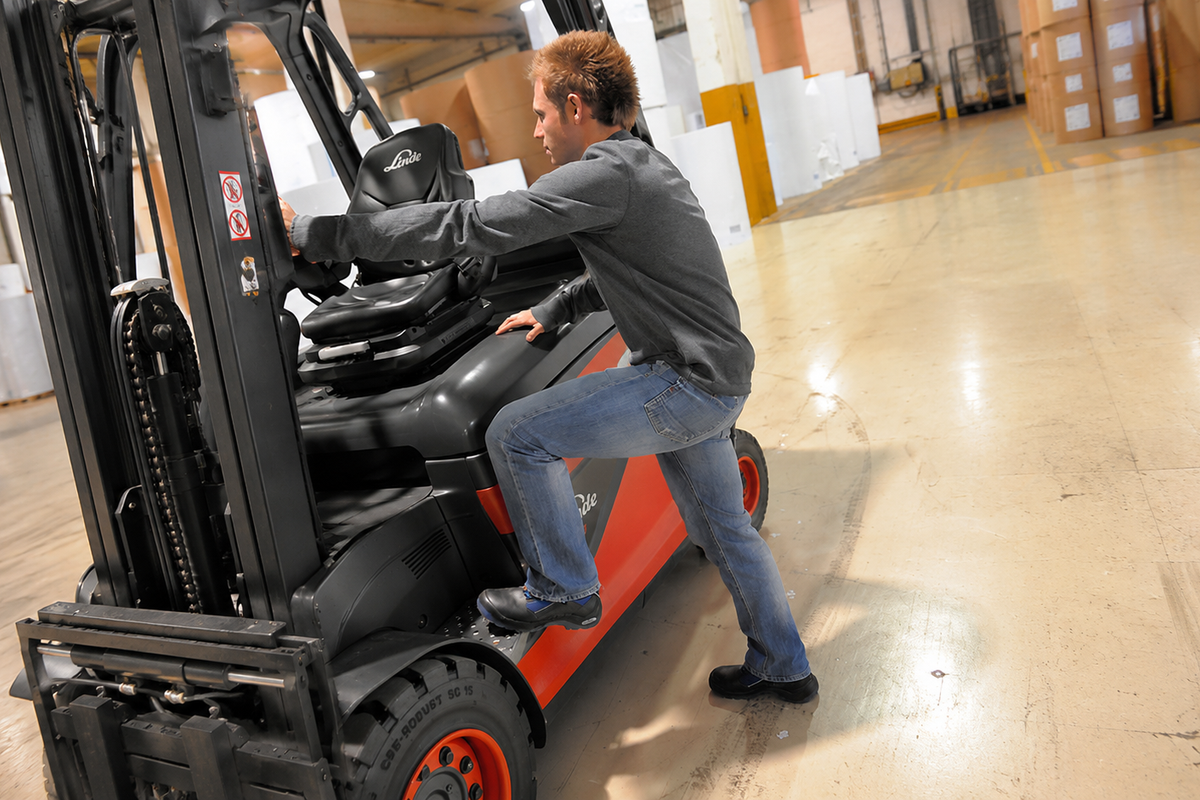
Take care of your forklift like a 'good steward' to avoid damage or wear from incorrect use! Adjust your seat properly and learn in this training to get on and off correctly!
Whoever doesn't jump down... won't have back pain later!
Legislation and responsibilities (mandatory since 25/05/2024)
- 1° the nature of the risks and the biomechanical and other risk factors referred to in article VIII.1-1, as well as the possible health consequences such as MSDs
- 2° the prevention measures taken and the appropriate working methods, as well as the way they are applied
- 3° the role of the hierarchical line in applying and monitoring the prevention measures;
- 4° health surveillance
- 5° the procedure for detecting and reporting MSDs or other health problems caused by musculoskeletal risks at work
Content: adaptable to the target group
- Risks and points of attention
- Definition of ergonomics
- Basic human anatomy and physiology
- Consequences of a wrong sitting posture on the forklift
- Back problems
- Shoulder
- Neck complaints: 'whiplash'
- Ankles
- Ergonomic checklist for the forklift
- Cabin dimensions
- Sitting position, seat comfort and adjustment options
- Steering wheel, pedals, levers
- Ease of operating mast functions
- Visibility
- Vibrations and noise
- Temperature and exhaust fumes
- Clothing and PPE
- Prolonged sitting (sedentary behaviour) vs movement
- Tools and techniques in practice
- Adjusting the forklift in practice
- Back-friendly getting on and off
- Sitting and working posture
- Adapted speed and no abrupt movements
- 'Pause time'
- Stretching and muscle-strengthening exercises
NO WORDS, BUT ACTIONS!
- Theoretical introduction (30%) with plenty of practical exercises (70%)
- Every participant receives a certificate of attendance
The employer ensures that workers and the Committee receive information and appropriate training on musculoskeletal risks at work. (Art. VIII.1-5, Royal Decree amending book VIII of the code on well-being at work concerning ergonomics at work and the prevention of MSDs)
The employer ensures that every worker receives sufficient and appropriate training on the well-being of workers in the performance of their work, specifically focused on their workstation or function. This training is adapted to the evolution of risks and the emergence of new risks and is, where necessary, repeated at regular intervals. (Code, book II, title 3)
Frequently asked questions
Who is the ergonomics for forklift operators training for?
For forklift operators who spend many hours on the forklift and want to avoid back, neck and shoulder complaints.
Why is an ergonomic forklift important?
A well-adjusted and comfortable forklift reduces health complaints and increases productivity; involve the operator in the purchase.
Do I receive a certificate?
Every participant receives a certificate of attendance.